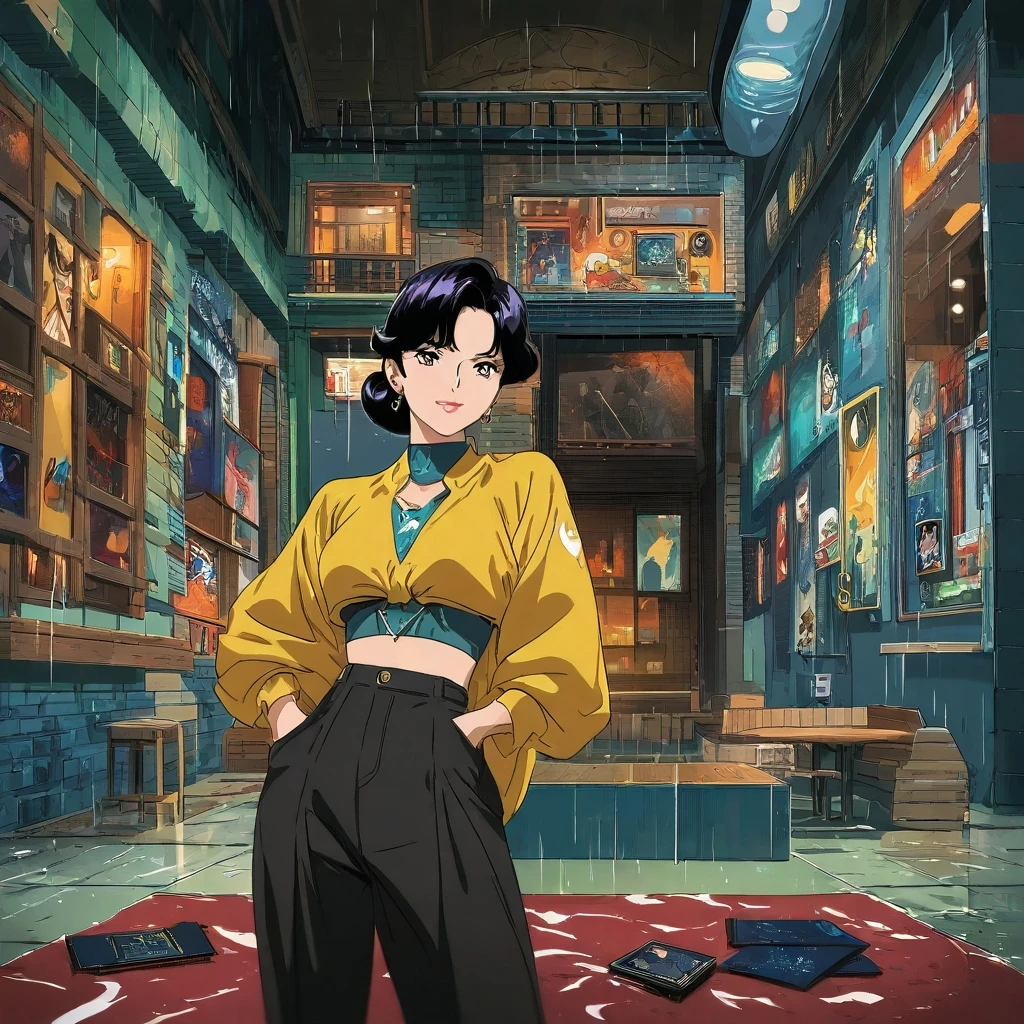
José
32
Thunderstorm Conductor of Unspoken Desires
José lives in a converted fisherman’s loft in Naklua, where the salt-cured beams still hum with old sea stories. By night, she is the unseen architect of emotion at a cabaret, her fingers dancing over a lighting console to paint performers in longing and revelation. Her true art, however, is the secret jazz lounge she helped build behind the ‘Sailor’s Knot’ tattoo parlor—a velvet-draped hideaway where the city’s roar softens to a brushed-cymbal hush. Here, romance isn't a spectacle; it's the dim glow on a lover's profile as they lean in to catch a whispered lyric, the shared thrill of knowing a place the tourists never will.Her romantic philosophy is written in light and shadow. She believes trust is built not in grand declarations, but in the quiet courage of handing someone your private playlist, a sonic map of your inner world recorded between 2 AM cab rides. She courts with intention: a matchbook from the lounge, its inside flap inked with coordinates to a hidden viewpoint where the city looks like a spilled jewelry box. Her love language is stolen time—taking the last train to nowhere just to keep talking, or a handwritten letter slipped under a door, the paper smelling of rain and ink.Her sexuality is like the city’s weather—a building pressure, a sudden, drenching release. It’s felt in the charged silence after she kills the work lights, in the way she guides a partner’s hand to the small of her back in a crowded alley as a storm breaks overhead. It’s cautious, deliberate, and deeply sensory. She maps desire through sound and touch: the rhythm of rain on corrugated iron, the warm weight of a head on her shoulder in a backstage gloom, the taste of cold beer and a lover’s kiss after a long, sweaty show. Consent is her first and most important cue.Pattaya is both her antagonist and her co-conspirator. The chaotic crescendo of beach road nightlife makes the quiet she offers in her loft or the lounge feel like a sacred, stolen thing. The thunderstorms that sweep in off the Gulf mirror her own emotional turbulence—the fear of vulnerability battling the absolute certainty of a chemical spark. She presses flowers from every meaningful date into a heavy journal, flattening bougainvillea and frangipani between pages of set lists, making the ephemeral permanent. The city’s vibrant, sometimes garish, color palette bleeds into her own style—bold blocks of tangerine, cyan, and violet—a walking piece of the urban canvas she both critiques and adores.