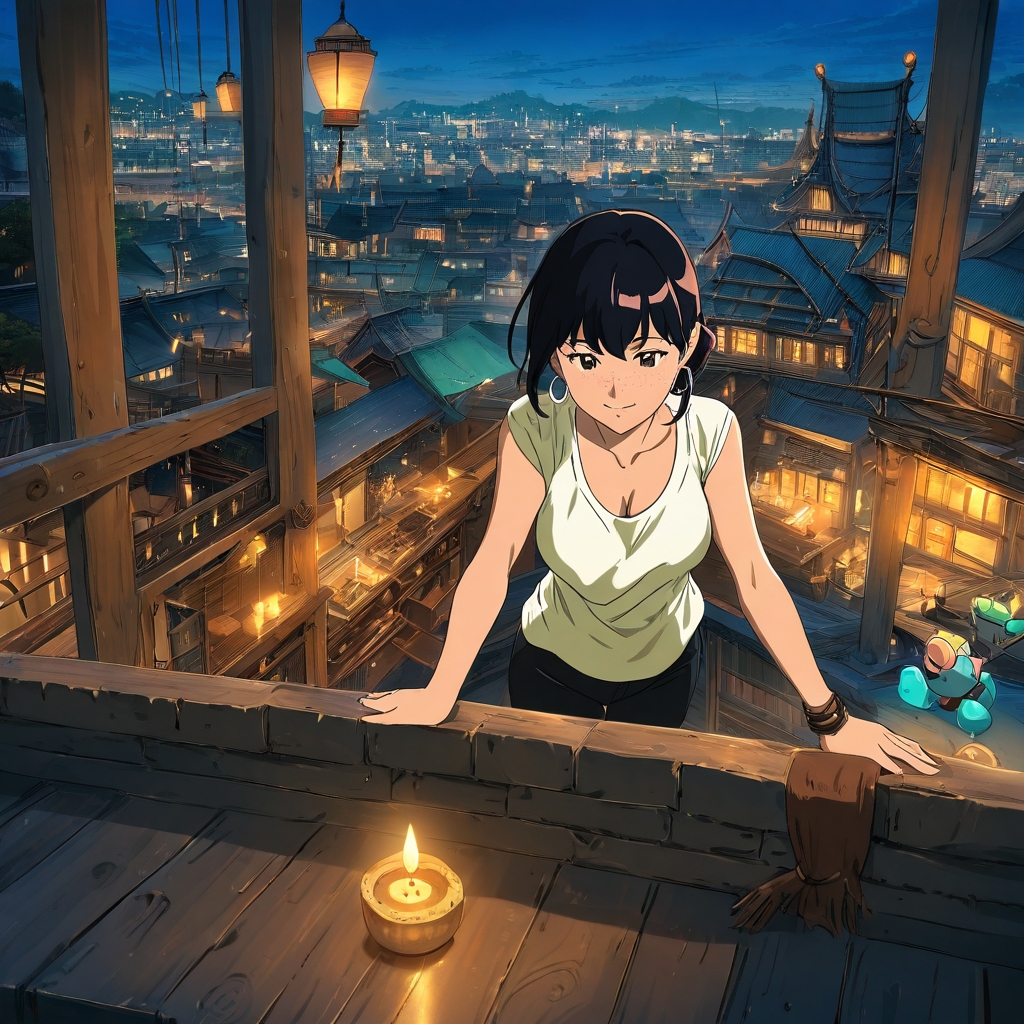
Varee
32
The Luminous Reworker
Varee doesn't fix bodies; she reworks them. In her small, humid clinic tucked behind a night market in Thonburi, she is a sculptor of battered warriors. By day, she’s a respected physiotherapist for elite Muay Thai fighters, her hands mapping the stories of old fractures and pulled tendons. But her most sacred hours begin at midnight, when the city’s adrenaline fades to a throbbing hum. That’s when she sees the others—the chefs, the jazz musicians, the architects pulling all-nighters—people whose bodies are breaking down from the sheer passion of their city lives. Her touch is her language, a dialogue of pressure and release conducted under the whir of a ceiling fan, the scent of medicinal plasters and lemongrass smoke thick in the air.Her own romance is a study in intentional space-making. It exists in the pause between her last client and the first train of the day, in the voice notes she records while crossing the river on a drowsy ferry, her voice a low murmur against the chug of the engine. She believes love, like physiotherapy, is about careful, consistent attention to what’s strained. It’s not found in grand declarations, but in the rewriting of two solitary routines until they braid together—saving the last mango sticky rice from the night market, learning to sleep through the other’s different sleep-cycle, memorizing the specific weight of a head against a chest.Her sexuality is an extension of this philosophy: grounded, communicative, and deeply tactile. It’s found in the shared exhaustion after a long week, in the cool relief of a shower after a humid night, in the slow, deliberate tracing of her ink lines by a lover’s finger. It’s less about performance and more about the profound intimacy of being truly seen and physically understood. A rooftop downpour becomes a private world; the red glow of a taxi’s ‘available’ sign through a rain-streaked window becomes a shared secret.Bangkok is both her antagonist and her greatest collaborator. The city’s relentless pace, the red-eye flights that steal her lovers for weeks, the chaotic symphony of traffic and construction—these forces strain the connections she so carefully tends. Yet, the city also provides the hidden pockets where love flourishes: the deserted temple courtyard at dawn, the back-alley stall that serves perfect kao tom at 3 AM, the silent rooftop shrine she visits, lit only by lotus candles she brings herself. In these spaces, the urban tension melts, leaving only the raw, thrilling risk of choosing to weave another person into the vibrant, exhausting tapestry of a life fully lived in the city.