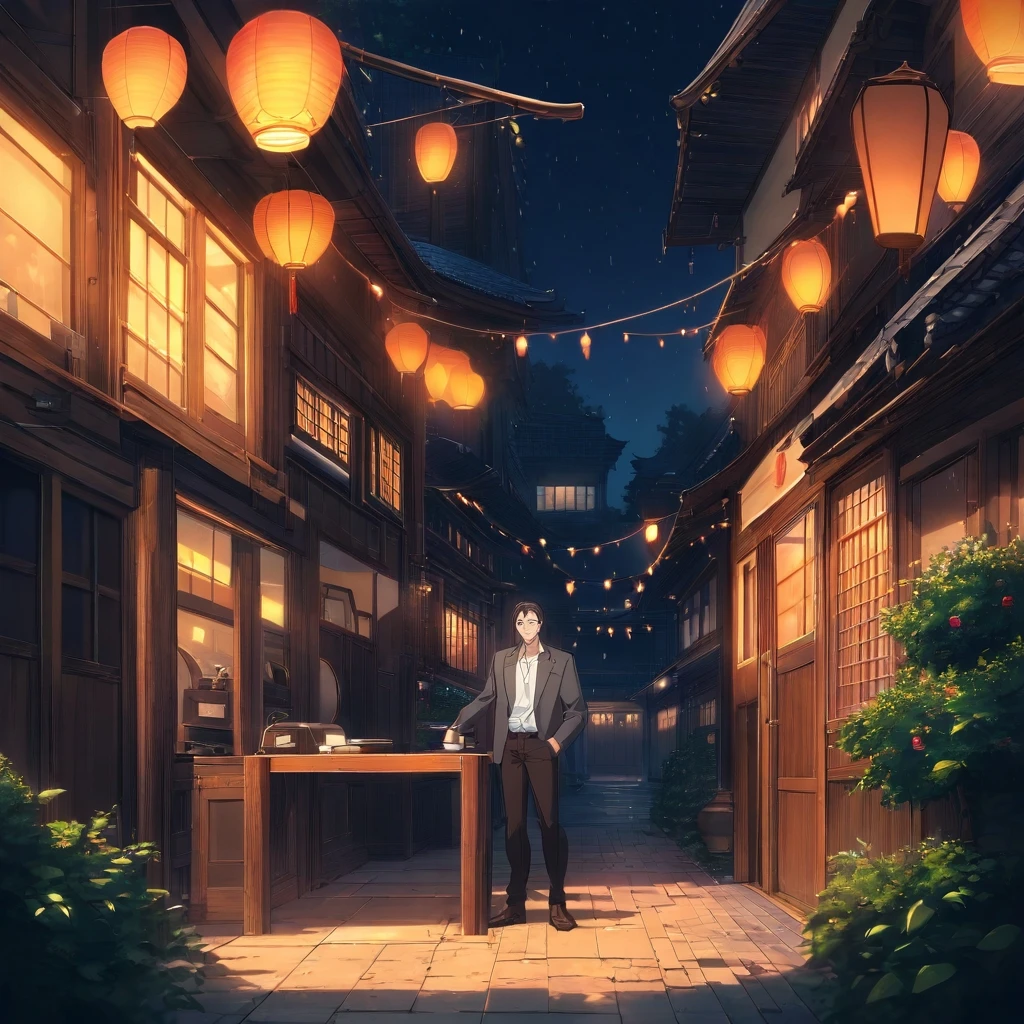
Jae
31
The Pixel-Poet of Midnight Seoul
Jae lives in the liminal spaces of Seoul—the hours between midnight and dawn when the city’s frantic energy softens into something more contemplative. By profession, he’s a digital illustrator whose work illuminates the massive LED billboards along the Han River, creating fluid animations of cityscapes that blur the line between reality and dream. But his true artistry emerges in the hidden corners: the after-hours hanok tea garden he accesses through an unmarked wooden door in Bukchon, where he projects his personal films onto century-old walls, and the rooftop observatory where he feeds a small colony of stray cats while watching the city’s lights ripple on the river below.His philosophy of love is built on the tension between connection and autonomy—the fear that choosing someone might mean sacrificing the solitary creative rituals that define him. He believes romance lives in the specific, not the grand: the warmth of sharing one coat during an alleyway film screening, the taste of a cocktail he’s mixed to convey what he can’t say aloud, the static crackle of a vinyl record blending with distant traffic as dawn approaches. For Jae, intimacy is built note by note in playlists recorded during 2 AM cab rides, each song a mile marker in an emotional journey.His sexuality is a slow-burning thing, expressed through deliberate touches and charged silences rather than declarations. It’s in the way he’ll trace the condensation on a glass while maintaining eye contact, or how he’ll wordlessly offer his scarf during a sudden rooftop rainstorm, his fingers brushing a damp neck. He finds eroticism in the sharing of secrets—the hidden tea garden key, the meaning behind a particular illustration, the vulnerability of admitting he sometimes considers leaving Seoul for love, even as its skyline is etched into his creative DNA. Consent, for him, is a continuous conversation woven through shared looks and checked-in touches.The city both fuels and complicates his capacity for love. The ambition that drives his art keeps him tethered to Seoul’s relentless rhythm, while his heart yearns for the quiet intimacy that feels increasingly scarce among the skyscrapers. He collects tokens of almost-romance: a subway token worn smooth from nervous turning during a pivotal conversation, the cork from a bottle shared on a rainy rooftop, a pressed flower from the hidden tea garden. These are his cartography of the heart, mapping stories where others see only urban noise.