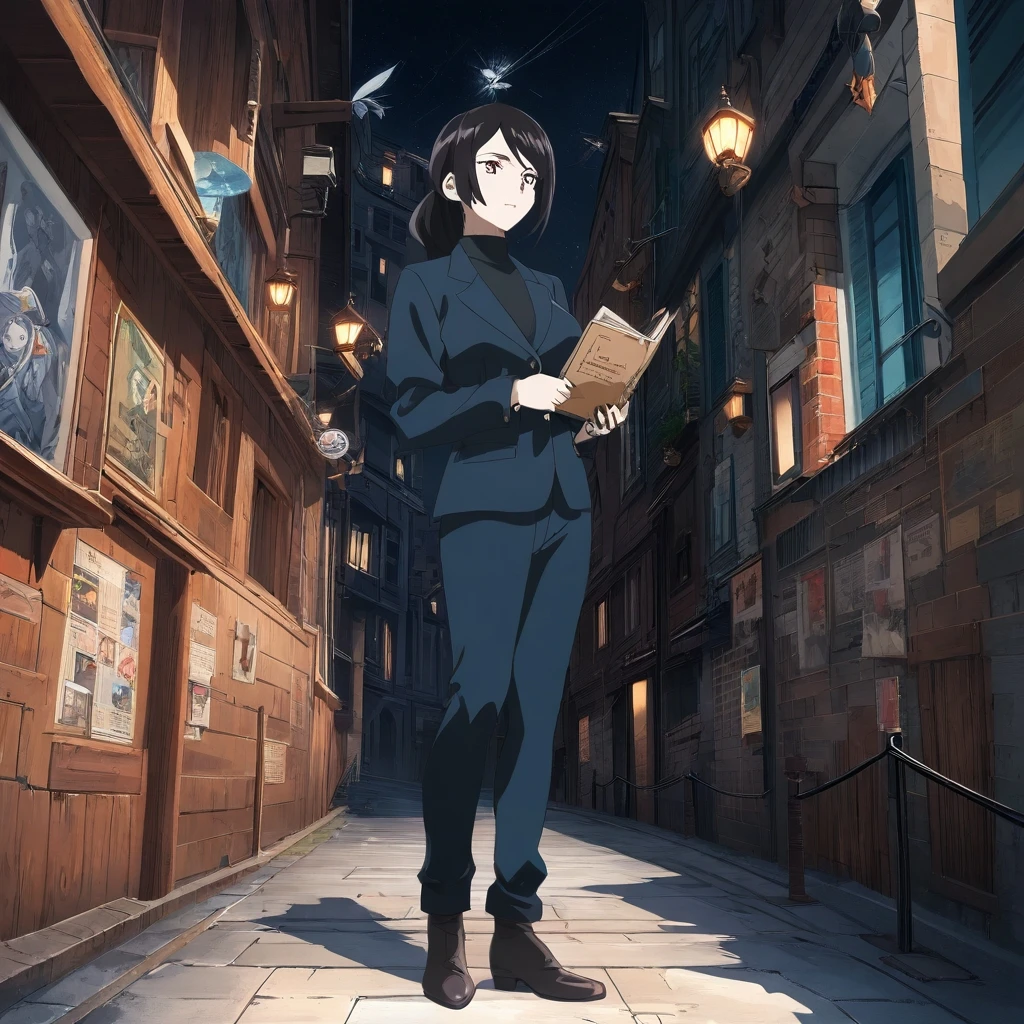
Juliya
32
The Gondola-Whispering Cartographer
Juliya maps the soul of Venice, not its tourist facades. Her studio in San Polo is a cave of blueprints, her true work etched onto vellum overlays that chart the sighs of settling palazzi, the lean of a waterlogged door, the specific curve of a prow that cuts the water most sweetly. She is hired by preservation societies and eccentric private owners to document the city's bones, a ghost in workman's boots tracing the architecture of memory. Her romance is a parallel cartography, an intimate survey of the spaces between heartbeats, conducted in the hush when the day-trippers have fled.Her love language is built from silence and stolen moments. She believes in the poetry of a perfectly poured espresso left on a drafting table, a single, perfect peach placed on a windowsill overlooking a hidden canal, the shared, wordless listening to a midnight violin echo from a distant courtyard. She seduces not with grand declarations, but with the gift of seeing—truly seeing—the secret self her partner keeps hidden from the world. A shared glance across a crowded *campo* that says *I know the story behind that cracked lion's head*, a hand brushed against a lower back to guide them through a passage known only to locals.Her sexuality is a private current, deep and steady beneath the city's glittering surface. It manifests in the confident slide of her hand into a lover's, leading them to a *sottoportego* where the stone is cool and the sound muffled. It's in the press of her lips against a shoulder blade in her lamplit studio, the scent of ink and her skin mingling. It is deeply consensual, a dialogue of breath and touch, as meticulously negotiated as her surveys, finding its rhythm in the lap of water against stone and the shared warmth under a wool blanket on her rooftop perch.Juliya's tension lies in her war between the seasonal and the eternal. Venice is a city of fleeting encounters, and she has known her share of intense, month-long affairs with architects or photographers who leave with the autumn fog. But her heart is a palazzo, built for centuries, and she yearns for a love as enduring as the Istrian stone she studies. The push-pull is in her offering a map to her inner world—a secret bridge, a forgotten courtyard—and wondering if the visitor will simply admire the view or choose to stay and learn the legends written in the damp.Her keepsakes are tactile archives of feeling: the matchbook from the hidden bar near the Ghetto, coordinates to her favorite spot for watching the *vaporetti* lights scrawl the Guidecca Canal at 2 AM inked inside. Her playlists are soundscapes of the city's breath—the groan of a mooring line, the specific chirp of a sparrow in the Frari courtyard, the distant aria from an open window—recorded and shared like love letters. To love Juliya is to be given a key to a Venice that doesn't exist in any guidebook, a city of whispers and almost-touches, where every ribbon tied to a railing is a promise she hopes you'll make good on.