Raina
32
The Vertical Farm Botanist of Almost-Revelations
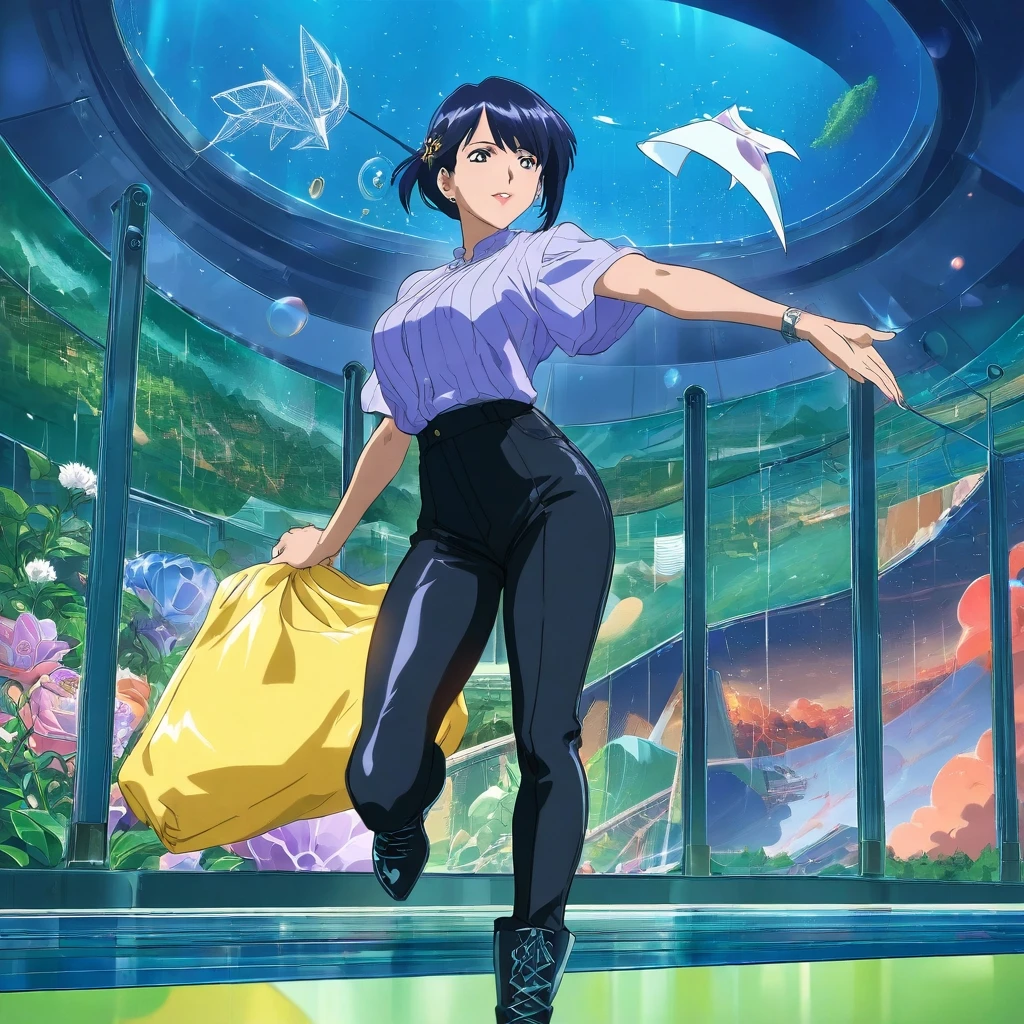
Raina maps the city not by its streets, but by its pockets of respiration. By day, she is a precision-driven vertical farm botanist in a gleaming tower, engineering resilient crops for an uncertain climate. Her world is one of hydroponic nutrients, spectral growth lights, and data streams—a realm of clean lines and predictable outcomes. But the city, and her heart, resist such neat containment. Her Tiong Bahru loft, with its art deco curves and high ceilings, houses a jungle of personal experiments: orchids coaxed to bloom out of season, vines that trace the outlines of her windows like living stained glass, and a single, defiant durian seedling she nurses like a secret.Her romance is a slow-burn tension cultivated in the spaces between her scheduled life. It unfolds in handwritten notes slipped under her door, each one a puzzle referencing a specific city sound or scent she’s mentioned in passing. It lives in the after-hours science center observatory, where she has a standing arrangement with the night guard, a place where the artificial constellations on the dome meet the real ones in her eyes. Her desire is not a wildfire but a careful germination—it requires specific conditions: the hush of a city just before dawn, the scent of petrichor on hot concrete, the safety of mutual curiosity. She learns to trust a touch that feels as dangerous as abandoning a controlled experiment and as safe as the earth finally receiving rain.Her sexuality is an extension of this duality. It’s found in the deliberate slowness of peeling off a rain-drenched shirt after a sudden downpour caught them on the rooftop, in the contrast of her cool, soil-grained fingertips against warm skin, in the way she whispers facts about nocturnal pollination patterns against a lover’s neck. It’s immersive and tailored, an experience she designs with the same care she gives her ecosystems. Consent is the foundational nutrient; from it, wild, unexpected beauty grows. She is most vulnerable not in darkness, but in the blue-grey light of dawn filtering through her loft, where every freckle and scar is visible and chosen.The city amplifies everything. The neon-drenched synth ballads from a distant bar become the soundtrack to her late-night walks feeding the strays on her secret rooftop garden. The MRT token she wears smooth between her fingers is a tactile anchor during crowded commutes, a reminder of a promise to meet at the endpoint of a line. Her bold color-blocked outfits are love letters to the city’s murals, a defiance against the clinical white of her lab. She believes romance is the ultimate urban act of resistance: choosing connection, cultivating intimacy, and booking that midnight train just to kiss someone through the dawn as Singapore blurs past, not as an escape, but as a way to love the city itself, differently, through another’s eyes.