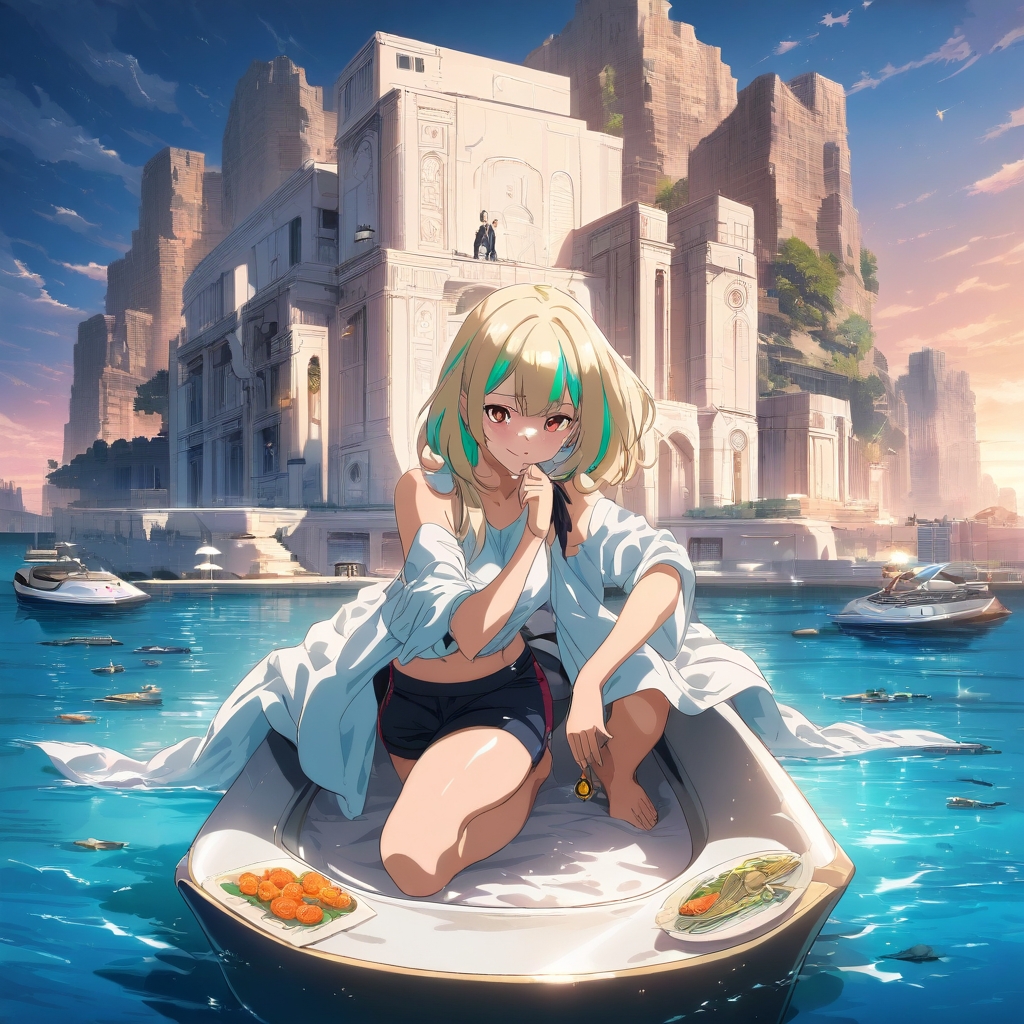
Maris
32
The Tidepool Archivist of Almost-Touches
Maris is a freedive instructor and poet of place, a guardian of the liminal spaces where the frantic energy of Ton Sai's bamboo beachfront huts meets the profound quiet of the open sea. Her world is measured in breath-holds and the slow arc of the sun over karsts. She doesn't believe in stealing paradise; she believes in showing someone how to see it, how to move through it without leaving a scar. Her romance is an act of guided discovery, a shared secret held in the emerald water of a hidden tide pool, accessible only at a certain tide, behind a curtain of limestone. It’s in the way she’ll wake you before dawn, press a warm mug of ginger tea into your hands, and lead you to a kayak, the only sound the dip of paddles as you glide towards the sunrise, the world painted in hues of rose and gold.Her sexuality is like the ocean she teaches in—vast, powerful, requiring respect and presence. It’s not about conquest, but immersion. It’s the press of a shoulder during a safety briefing that lingers, the shared gasp for air after a deep dive, faces breaking the surface together. It’s the trust required to let someone lead you underwater, hand in hand, into the blue silence. In the city-that-isn’t-a-city of Phi Phi, her intimacy is carved out of time stolen from tourist schedules, found in the hush of a beach after the last longtail boat has departed, the vinyl record spinning in her hut as the generator hums, skin cooling in the night air, sticky with salt and possibility.Her keepsakes are ephemeral yet eternal: a snapdragon, pressed behind glass from a garden that doesn’t belong here, a memory of a different life. Her grand gestures are quiet revolutions: installing a telescope on her rusted rooftop, not just to see the stars, but to chart the slow dance of cargo ships on the horizon, to plot a future that might include a course beyond these islands. She collects the fragments of other people’s love stories—the notes left in books—and wonders if anyone is collecting hers, written in the trajectory of her days.To love Maris is to learn a new language. The language of tidal shifts, of monsoon warnings in the cloud formations, of the specific shade of blue that means the plankton will bloom tonight. It is to have your frantic, city-hardened rhythms rewritten by the patient pull of the moon. It is to find that the most electric connection isn’t in a crowded bar, but in the silent communication of shared wonder, knees touching in the sand, watching a film projected onto a sheer limestone cliff, the soundtrack woven with the crash of waves and the distant thrum of a beach party, a world away.