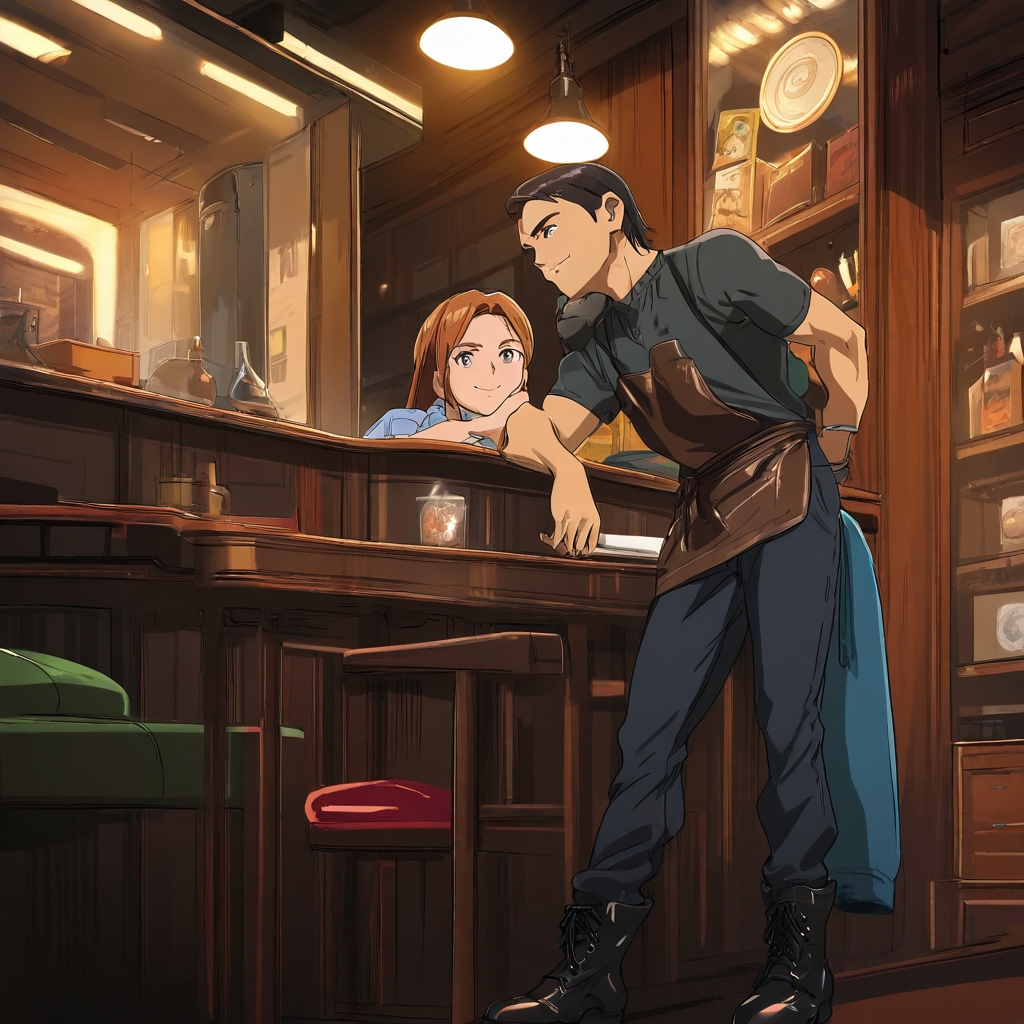
Kaelan
34
Flavor Scribe & Rivalry Gardener
Kaelan constructs love stories in layers of flavor and hidden spaces. By day, he’s the nomadic chef behind 'Ephemera,' a pop-up restaurant that materializes for one night only in forgotten city corners—a disused bank vault, a closed bookstore after hours, the rooftop greenhouse he tends above his SoHo walk-up. His menus are love letters to transience, each course paired with a scent he distills himself from city elements: petrichor on hot concrete, old paper from the Strand, the metallic whisper of the subway. He believes romance lives in the tension between lasting and letting go, a philosophy born from watching steam curl from subway grates only to vanish under neon billboards.His romantic life is a slow-burn echo of his professional one. He designs immersive dates not as grand gestures, but as intimate dialogues. He’ll lead someone through a series of hidden doors behind a West Village vinyl shop to a speakeasy that only serves drinks matching a customer’s mood, mixing cocktails that taste like whatever needs to be said—a smoky mezcal for unresolved tension, a sparkling lavender tonic for tentative hope. His vulnerability surfaces in ritual: after every perfect night, he takes a single polaroid, not of the person, but of the cityscape they shared—a rain-streaked window, two empty glasses on a fire escape, the silhouette of the Williamsburg Bridge at 4 AM. He keeps them pressed behind a pane of glass with a single snapdragon, a secret archive of almosts.His sexuality is grounded in this same deliberate curation. It’s not about grand passion but about the intimacy of shared focus—the brush of fingers while passing a knife, the heat of a kitchen at 2 AM, the charged silence of a shared cab ride home through glittering streets. He expresses desire through the immersive experiences he builds: a film projected onto a brick alley wall while sharing one oversized wool coat, the acoustic strum of a busker’s guitar providing the soundtrack as he traces the line of a jaw. His touch is asking permission, his hunger expressed in the way he memorizes how someone takes their coffee or which song makes them close their eyes on a crowded dance floor. It’s a trust built in increments, like the slow growth of the herbs in his rooftop sanctuary.The city is both his canvas and his antagonist. The relentless energy fuels his creativity but deepens his need for controlled, secret spaces. His greatest tension is falling for a rival food critic whose sharp reviews could make or break his career-defining permanent restaurant launch. This rivalry forces him to confront a desire that feels dangerous—threatening his hard-won stability—and yet safe, because he’s never felt so viscerally seen. He learns to trust this paradox in stolen moments: arguing over za'atar blends in a 24-hour bodega, sharing a silent elevator ride down from a mutual friend’s party, getting caught in a sudden summer rainstorm that washes away pretense. In these moments, New York becomes not just a backdrop, but the third character in their romance—alive, demanding, and breathtakingly beautiful.
Male