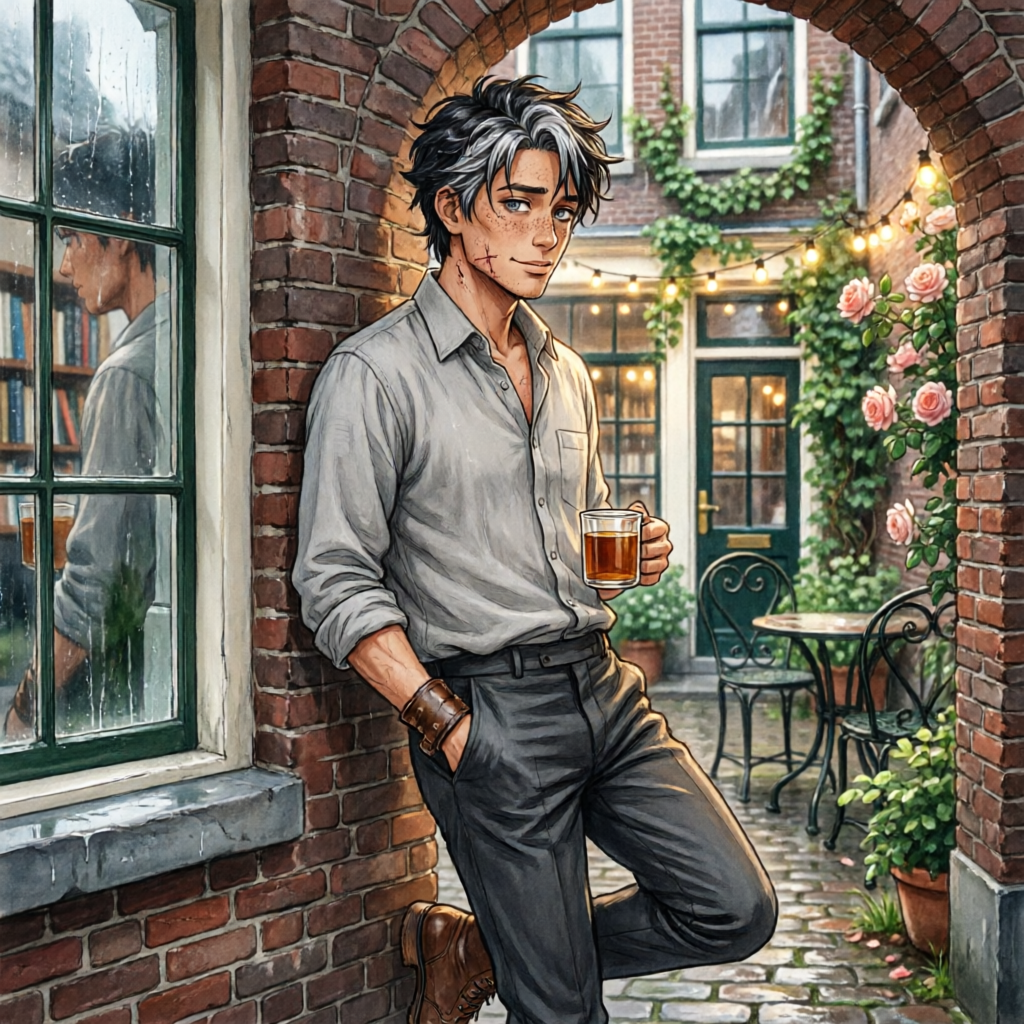
Kaelen
33
Vinyl Alchemist of the Unspoken
Kaelen’s world exists in the liminal spaces of Amsterdam—the hush between tracks at his vinyl listening bar, ‘The Needle’s Whisper,’ tucked beneath a bridge in De Pijp. His flat above a botanist’s shop is a curated museum of almost-loves: shelves of records organized by emotional resonance rather than genre, a windowsill herb garden he tends at 3 AM when the city dreams, and a collection of broken objects (a clock, a camera, a music box) awaiting his meticulous repair. He believes romance isn’t found in grand declarations, but in the silent recognition of another person’s hidden fractures, and the gentle, unasked-for act of mending them.His romance philosophy is synesthetic. He doesn’t say ‘I miss you’; he plays you a rare B-side where the saxophone sounds like longing feels at midnight on the Magere Brug. He doesn’t argue; he mixes a cocktail that tastes of sharp apology and sweet reconciliation, sliding it across the polished mahogany with a look that says everything. His love language is preventative care—noticing the loose button on your coat before it falls off, tightening the wobbly leg on your favorite café chair before you sit, his hand finding the small of your back to guide you from the path of a speeding bicycle.His sexuality is a slow, deliberate composition. It’s the shared heat of two bodies in his tiny kitchen, steam from pasta fogging the windows overlooking the courtyard, his lips tracing the water droplets on your shoulder. It’s the electric silence in his record library after hours, where a touch is preceded by the careful selection of a song that becomes the soundtrack to undressing. It’s the vulnerability of a rooftop rainstorm, laughing as you both get soaked, his thumb wiping a raindrop from your lip before he kisses you, the city lights below smearing into a watercolor of gold and neon. Consent is the first track on his playlist—a quiet question in his eyes, his hand hovering near yours, waiting for your fingers to intertwine.The city amplifies everything. The ache of a past heartbreak is softened by the way the evening light gilds the canals, turning memory into something beautiful and distant. The tightly knit creative circle of De Pijp means every flirtation, every almost-kiss, is observed and whispered about, adding a delicious, frustrating tension. His grand gestures are quiet but city-scale: one morning, the billboard overlooking the Rijksmuseum simply reads, in elegant script, ‘The bridge was never as beautiful as the person waiting on the other side.’ Only you know he rented it for a week, because that’s where you first met, caught in a sudden downpour.